Concrete steps construction in Agoura Hills CA - an entry that stays level and solid
Cracked, sinking or tilting front steps? We build new poured or precast concrete steps on a packed base, so your entry stays even underfoot.
- Licensed and fully insured.
- Free estimates at your property.
- We reply within 1 business day.
What goes into building new concrete steps in Agoura Hills?
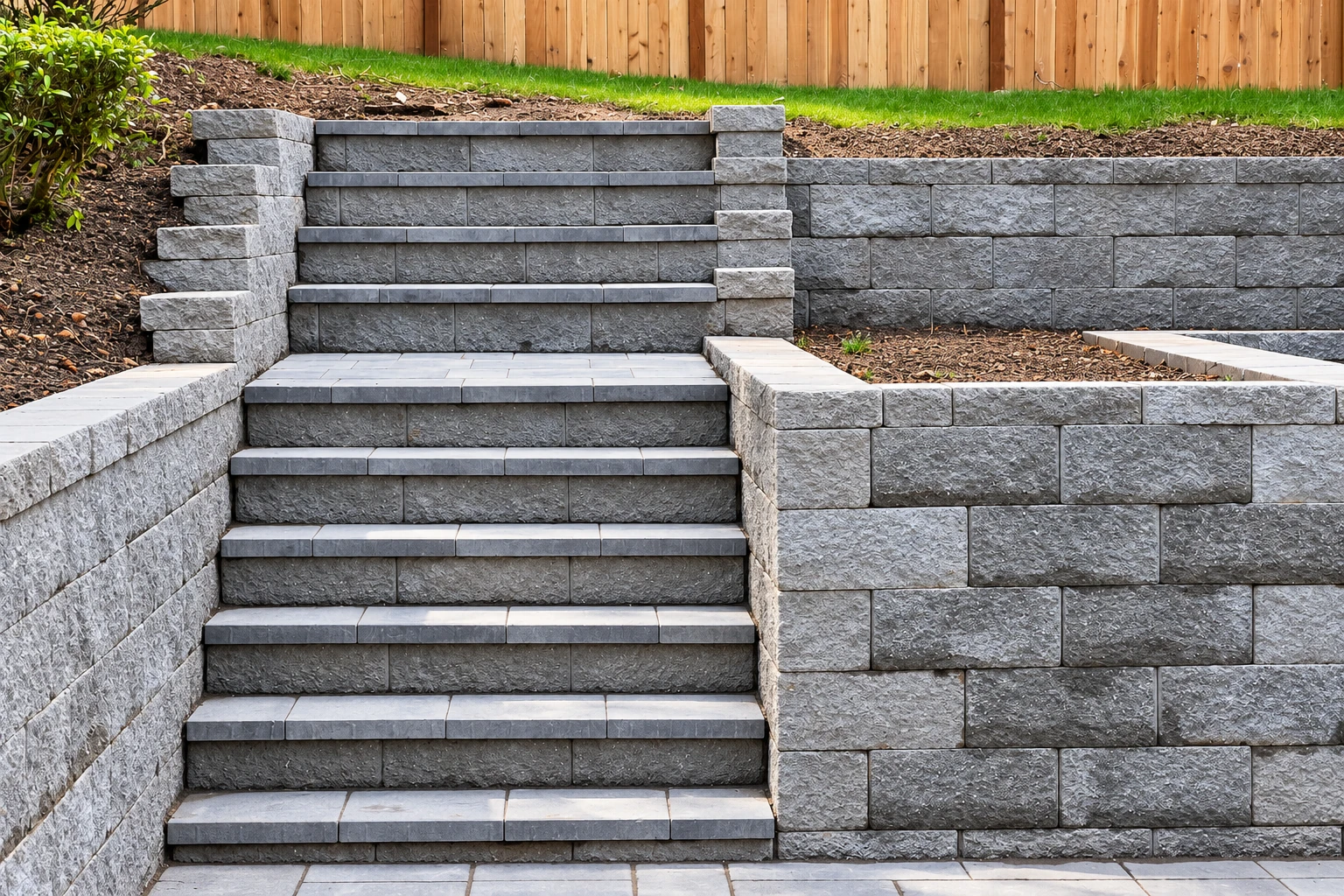
Concrete steps construction in Agoura Hills means building a new set of steps up to your door. They're either poured on site or set as precast steps, which are hollow and easier to put together, so you get an entry that's solid and even underfoot.
Most calls start with old steps that have cracked, sunk or tipped toward the house, or a new door that needs steps where there weren't any. The price moves with how many steps you need, how tall and wide they are, whether you go poured or precast, and how much digging the ground needs. The schedule turns on that digging, the weather on pour day and the curing time after. Your written estimate spells out the prep, drainage, steel and curing for your steps, and we're licensed and fully insured for the work.
How we build concrete steps
I start by measuring the rise from the ground to your door and checking where water runs, because steps that fall toward the house send rain right back at it. Then we dig out the subgrade, the dirt the steps sit on, and pack it firm instead of raking it level. Next we set the forms and put in rebar or mesh, the steel inside that holds the concrete together. We plan the pour for early morning or late afternoon, since midday heat dries the top too fast and leaves it weak and dusty later. Then we give the treads a broom finish, a light texture that gives your feet some grip, and let the concrete cure, the wait while it gains strength. If the budget gets tight, the base is the last place I'd cut, because nobody sees it once it's poured and a nice finish on a soft base cracks and settles just the same.
Steps usually tie into something bigger. If you're adding a room on a new slab, we can form the steps along with the slab foundation building so the two line up. On a house or addition going up, we plan them with the foundation installation so the landing meets the door at the right height.
Poured on site
Poured steps cost more, but we form them to the size you need, so they suit wide entries, tall rises and steps that wrap a corner. They're the right pick when getting the size right matters more than the price.
Precast steps
Precast steps are hollow units that cost less and go together more easily. They suit a standard entry where a stock height and width fit, and I'll tell you at the estimate if yours does.
If a step rocks, sinks or pulls away from the door, call (747) 219-1796 rather than wait, because loose steps trip people and the gap lets water in.
What happens after you call about new concrete steps?
From the first call to the final walk-through, here's who does what. I handle the visit and the estimate myself, and I'm on site with our crew for the whole build.
Call or send a message
Call (747) 219-1796 or use the form and tell me about the steps you want. We set a time for me to come out and see the entry.
I visit and write it up
I measure the rise to your door, look at the ground and where water runs, and hear what you want to spend. Your written estimate spells out the prep, drainage, steel, joints and curing, tells you poured or precast and why, and flags any permit, engineer or scan the job needs first.
We build from forms to finish
I'm on site with our crew from setting the forms to the last pass of the broom. If pour day turns out wrong for concrete, I call you and we pick another day.
Walk the new steps together
Before we pack up, we walk the steps with you and check the treads and edges. I also show you the simple upkeep that keeps concrete steps around for a long time.
Get a written estimate for your concrete steps
We reply within one business day and set a time for me to come out, measure your entry and give you a free written estimate at your property. There's no pressure to book.
(747) 219-1796What changes concrete steps construction in Agoura Hills
California law decides who can build your steps. Under rules from the state licensing board, an unlicensed person can only take small jobs below $1,000, and a contractor's license is required whenever the work needs a permit of any kind or workers are hired to help, even on a job under $1,000. We're licensed and fully insured, so that part is covered. Whether your steps need a permit isn't something I'd guess at, so we check with the building office for your address before we start, and if yours needs one, we tell you at the estimate and apply for it before any work begins.
The ground is the other thing to know about. Expansive soils, clay that swells when it's wet and shrinks as it dries, are common in California, and the California Geological Survey maps where they are, so you can look up your area before we dig. I check the dirt at the estimate and plan the base for it, and we see the same hillside entries and mixed ground on jobs in Thousand Oaks and Calabasas, along with other cities on both sides of the county line. If you're nearby and don't see your city listed, call and ask.
Concrete steps questions from Agoura Hills homeowners
How much do concrete steps cost in Agoura Hills?
Installed concrete steps across the US usually cost about $500 to $5,000 for a set of 5 to 10 steps, and that's a national figure, not our price. For poured steps, the forms and the rebar or mesh are usually counted in the material cost, while digging and groundwork add time and cost, and precast prices go up with the height and width of the steps. Your written estimate after I see the site gives you the number for your entry.
How long do concrete steps last?
Concrete steps last 30 to 40 years with proper care and upkeep. That long life depends on the care, so when we finish I show you the simple upkeep that keeps them in shape, and our work is backed by our satisfaction guarantee.
How long do new concrete steps need to cure?
One Michigan trade group's guidelines say new concrete should cure for at least three days, kept moist under plastic sheeting, with a spray-on curing compound or with steady watering. Curing is the wait while the concrete gains strength, and rushing it leaves a weaker surface, so I'll tell you how we're curing your steps and when they're ready to use.
Can concrete steps be poured in hot weather?
They can, but on a hot day the first question is whether to wait, because pushing ahead can mean costly repairs or tearing out bad work later. A windy, sunny day calls for more care than a calm, humid one at the same temperature, so we watch the wind and sun, not just the thermometer, and I'd rather move the pour a day than pour something I don't trust.
What causes concrete steps to crack or sink?
Most cracked or sinking steps sit on a base that was raked level instead of dug out and packed, so the dirt settles and the concrete goes with it. Water running toward the house and pooling at the bottom step makes it worse over time. New steps can still get a hairline crack, but a packed base, good drainage and steel inside keep it from turning into the kind of break you're looking at now.
What should I ask a concrete contractor before they build my steps?
Ask how they keep the mix workable on site, because adding extra water makes concrete easier to place but lowers the strength and durability of the finished steps. It's also fair to ask what goes under the steps and how they'll cure them, since those are the parts you can't see once the job is done.
Related concrete work around your steps
When new steps lead up to a fresh slab for an addition or a backyard room, pouring the slab right keeps the landing level with the door.
Building a new house or addition means the foundation sets the height of every doorway, so getting it right first makes the steps outside fit without guesswork.
Get a price on your new steps
Call (747) 219-1796 or use the form with the number of steps you need and their rough height and width, since precast prices turn on those measurements.